Kamis, 27 Oktober 2011

25 Years Later: "The Dream Has Come True..."

Two days ago, I wrote about the twenty-fifth anniversary of Game 6 of the 1986 World Series.  Miraculous as that game was, the Mets did not win their second championship that night.  The improbable comeback only forced a seventh and deciding game.

Do you remember seeing the replay of Red Sox catcher Carlton Fisk waving for the ball to stay fair in the 1975 World Series?  That home run gave the Red Sox a thrilling 12-inning victory over the Cincinnati Reds in Game 6.

That's right.  It happened in Game 6.  Just like the Mets' dramatic Game 6 victory in the 1986 World Series, the home run by Fisk did not give the Red Sox the World Series trophy.  All it did was force a seventh game, a game won by the Reds to give Cincinnati the championship.

Had the Mets followed up their Game 6 heroics with a loss the following night, the miracle comeback would have been for naught.  The Mets had to win Game 7 to validate their season.  The stage was set at Shea Stadium for the final game of the 1986 baseball season.  It was up to the Mets to make the dream come true for their fans.

Game 7 was originally scheduled for Sunday, October 26.  However, a steady rain forced the postponement of the game until the following night.  Red Sox starter Dennis "Oil Can" Boyd was supposed to start the seventh game against Ron Darling.  However, with an extra day of rest, the Red Sox chose to bypass Boyd (who had given up six runs to the Mets in his Game 3 loss) and gave the ball to Bruce Hurst.

Hurst had already defeated the Mets in Game 1 and notched a complete game victory against them in Game 5.  Although he was pitching Game 7 on three days rest, the Mets were still wary about Hurst.  His performances against the Mets in the World Series were reminiscent of Mike Scott's outings in the NLCS.  If the Mets were going to beat Hurst, Ron Darling was going to have to match him pitch for pitch.  Unfortunately, that was not the case in the early innings.

Bruce Hurst was his usual strong self in the early innings, keeping the Mets off the scoreboard.  Ron Darling?  Not so much.  After a scoreless first inning, he gave up three runs in the second inning, including back-to-back home runs by Dwight Evans and Rich Gedman.  By the time the fourth inning rolled around, Darling had already given up six hits and walked a batter.  He then hit Dave Henderson with a pitch to lead off the fourth inning.  After facing two more batters, Darling was relieved by fellow starter turned reliever Sid Fernandez.  The score was still 3-0 in favor of the Red Sox and the game was slipping away from the Mets.  It was up to El Sid to stop the fire from spreading.


In perhaps the guttiest (no pun intended) performance by Fernandez in his Mets career, he shut down the Red Sox.  After walking his first batter (Wade Boggs), Sid retired the next seven batters he faced, with four of them coming via the strikeout.  Fernandez did everything he could to keep his team in the game, but his efforts would go in vain unless the Mets could finally solve the puzzle that was Bruce Hurst.

With time running out on the Mets and their dream season, Davey Johnson was forced to make a difficult move in the bottom of the sixth inning.  After Rafael Santana grounded out to start the inning, the Mets were down to Sid Fernandez's spot in the batting order.  Would Johnson take Sid out for a pinch hitter, hoping that the Mets would start a rally or would he leave him in the game, possibly giving up on another inning in which to mount a comeback against Bruce Hurst?  Johnson chose to pinch hit for Fernandez and it ended up being one of the best managerial decisions he ever made.

Lee Mazzilli stepped up to the plate in lieu of Fernandez.  He greeted Hurst with a single to left.  Game 6 hero Mookie Wilson followed Mazzilli with a hit of his own, followed by a walk to Tim Teufel.  The base on balls loaded the bases for Keith Hernandez and brought the crowd of 55,032 to its feet.  The cheering rose to a crescendo when Hernandez delivered a two-run single to center, scoring Mazzilli and Wilson and sending Teufel to third.  Since Teufel represented the tying run, Davey Johnson sent in the speedier Wally Backman to pinch run for him as Gary Carter stepped up to the plate.  Carter came through as he drove in Backman with a ball that would have been a base hit to right had a confused Hernandez not been forced out at second base when rightfielder Dwight Evans rolled over the ball.  Hernandez had to freeze between first and second until he knew that the ball had not been caught.  Despite the out being recorded, the Mets had tied the game at 3.  They had finally gotten to Bruce Hurst and hope was alive at Shea.  That hope became greater when Ray Knight came to bat in the seventh inning against a familiar face.

Calvin Schiraldi had been brought in by the Red Sox to start the seventh inning.  Schiraldi was the losing pitcher in Game 6, having allowed Gary Carter, Kevin Mitchell and Ray Knight to deliver hits off him in the tenth inning.  This time, he was facing Knight with no one on base, trying to erase the bitter memories of his previous outing.  Knight would not provide him with the eraser.  On a 2-1 pitch from Schiraldi, Knight got under a pitch and launched it to deep left-center, barely clearing the outfield wall.  A jubilant Knight celebrated as he rounded the bases.  The Mets finally had their first lead of the game and they were going to make sure that they weren't going to give it back.  The hit parade continued in the seventh inning, as an RBI single by Rafael Santana and a sacrifice fly by Keith Hernandez gave the Mets a 6-3 lead.  The Mets were in front, but the Red Sox weren't going to go away quietly.

Roger McDowell had come into the game in the seventh inning once Sid Fernandez had been pinch hit for.  He continued where Sid had left off by retiring the Red Sox in order in the seventh.  However, things went a little differently for McDowell in the eighth inning.  Bill Buckner led off the inning with a single.  Jim Rice followed Buckner with a single of his own.  After Dwight Evans doubled into the gap in right field, scoring both Buckner and Rice, the lead had been cut to a single run.  The Red Sox were down 6-5 with the tying run on second base and nobody out.  It was time for Davey Johnson to make one last move, with the World Series on the line.

Jesse Orosco came in from the bullpen, hoping to shut down the Red Sox to preserve the lead for the Mets.  His first batter, Rich Gedman, had homered earlier off starting pitcher Ron Darling.  This time, he hit the ball hard again, but in the direction of second baseman Wally Backman.  Backman caught the line drive in the air, holding Evans at second base.  The next batter was Dave Henderson.  He had given the Red Sox the lead with a home run in the tenth inning of Game 6.  Now he had a chance to duplicate the feat, as a home run would have given Boston the lead.  This time, the only thing he made contact with was the air.  Orosco struck him out on four pitches and then induced Don Baylor to ground out to short to end the threat.  The Mets were now three outs away from a championship, but they weren't finished scoring yet.

The Red Sox called upon Al Nipper to face Darryl Strawberry to lead off the bottom of the eighth inning.  Nipper was trying to keep the Mets' lead at one so that the Red Sox could make one last attempt in the ninth inning to tie the game or take the lead.  It didn't take long for that one run lead to grow.  Strawberry greeted Nipper with a towering home run to right field that almost took as long to come down as it did for Strawberry to round the bases.  After Darryl finally finished his home run "trot" (To call it a trot would be putting it mildly.  It was more like a stroll and it led to a bench-clearing brawl the following season in spring training when Nipper and the Red Sox faced Darryl Strawberry and the Mets again.), the Mets had a 7-5 lead.  After a hit, a walk and an RBI single by Jesse Orosco on a 47-hopper up the middle (how appropriate since 47 was Jesse's number), the Mets had regained their three-run lead.  After being held scoreless by Bruce Hurst for the first five innings of the game, the Mets had exploded for eight runs in the last three innings to take an 8-5 lead into the ninth inning.  Orosco was still on the mound, hoping to throw the season's final pitch.

With the champagne ready to be uncorked in the Mets clubhouse, Orosco went to work on the Red Sox batters.  Ed Romero popped up to first base in foul territory for the first out.  That was followed by Wade Boggs grounding out to second base for the second out.  The Mets were one out away from a championship.  Nothing was going to stop them from winning this game.  Well, nothing except for the pink smoke bomb that was thrown onto the field.

That did not matter to Jesse Orosco or the Mets.  After the smoke cleared, Marty Barrett stepped up to the plate.  Barrett had already collected a World Series record-tying 13 hits, trying to set the record and keep the season alive for the Red Sox.  However, that was not to be.  We now turn the microphone over to the late Bob Murphy for the final pitch.

"He struck him out!  Struck him out!  The Mets have won the World Series!  And they're jamming and crowding all over Jesse Orosco!  He's somewhere at the bottom of that pile!  He struck out Marty Barrett!  The dream has come true!"  The Mets have won the World Series, coming from behind to win the seventh ballgame!"


The Mets had completed their dream season with a World Series championship.  After 108 regular season victories and a hard-fought six-game NLCS against the Houston Astros, the Mets were able to bring the trophy home.  At times, it seemed as if the season was going to come to a screeching halt, but through determination, perseverance and perhaps an extra pebble or two around the first base area during Game 6, the Mets came through for themselves, for their fans and for the city of New York.

In 1986, the Mets owned New York.  They were a blue (and orange) collar team for a blue-collar city.  Twenty-five years ago today, the Mets became the World Champions of baseball.  Victory never tasted so sweet.


One final postscript on the whereabouts of Jesse Orosco's glove:  I'm sure many of you who watched Game 7 remember Jesse Orosco flinging his glove up in the air after striking out Marty Barrett to end the World Series.  Have any of you wondered what happened to that glove?  Now it can be told!

If you have the 1986 World Series DVDs, watch the final out of Game 7.  After Orosco throws the glove up in the air and falls to his knees, he gets up just as Gary Carter and the rest of his teammates mob him at the pitcher's mound.  Now hit the "slow" button on your remote and watch closely as Bud Harrelson (wearing #23) runs around the crowd of players to the left of them.  He has nothing in his hands as he goes around the pile of ecstatic players.  Right before he goes off-camera, you can see him start to bend over.  When he comes back a split second later to celebrate with the team on the mound, he has a glove in his left hand.  That's Jesse Orosco's glove.

The Studious Metsimus staff had the pleasure of meeting Jesse Orosco earlier this year (see photo, right).  We asked him if he knew who retrieved his glove for him after he recorded the final out of the 1986 World Series.  For 25 years, he was under the impression that it was bullpen coach Vern Hoscheit, but wasn't sure.  When we informed him that it was Bud Harrelson and explained how he retrieved it, he was surprised to hear the news and thanked us for finally giving him confirmation.  Hey, it was the least we could do for the man who gave us one of our fondest Mets memories!

Selasa, 25 Oktober 2011

25 Years Later: "Little Roller Up Along First..."


Every generation has its defining moment.  People who grew up in the 1960s know exactly where they were when President Kennedy and Dr. Martin Luther King, Jr. were assassinated.  In the 1980s, every American knows where they were when the Space Shuttle exploded.  It's no different for Mets fans.

People who grew up rooting for the Mets remember every detail of the 1969 Miracle Mets' run to the World Series.  Fans of my generation well up with happy tears when you mention two words to them:  Game 6.  How can anyone forget the night of October 25, 1986?

The Mets were facing elimination entering Game 6 of the 1986 World Series.  They fought back to tie the Series at Fenway Park after dropping the first two games of the Series at Shea Stadium.  Then Bruce Hurst shut them down in Game 5 to send the series back to New York with the Mets down three games to two.

It was up to Bob Ojeda to save the Mets' season.  He was opposed by Roger Clemens, who was on his way to his first Cy Young Award.  Ojeda was also called upon for Game 6 of the 1986 NLCS against the Astros, a game in which the Mets defeated Houston in 16 innings to claim the National League pennant.  In that game, Ojeda struggled early, giving up three runs in the first inning before settling down.  Game 6 of the 1986 World Series was no different for Ojeda.  He gave up single runs to the Red Sox in each of the first two innings, but then settled down.

When Ojeda was replaced by Roger McDowell to start the seventh inning, the Mets had come back against Roger Clemens to tie the score at 2.  Although the drama that unfolded in the tenth inning is what Game 6 is most known for, a number of interesting events occurred in the seventh inning that are often forgotten.

With one out and Marty Barrett on first base for the Red Sox, Jim Rice hit a ground ball near the third base line that barely stayed fair.  Ray Knight fielded it and threw wildly to first base, with the ball popping in and out of the glove of a leaping Keith Hernandez.  That brought up Dwight Evans with runners on the corners.  Evans hit a ground ball for the second out of the inning, but Barrett scored the go-ahead run and Rice was able to advance to second base.  That was when Mookie Wilson became a hero for the first time that night.

Roger McDowell was able to get ahead of Red Sox catcher Rich Gedman by throwing strikes on the first two pitches, but Gedman then grounded the 0-2 pitch from McDowell between short and third for a base hit that appeared to give the Red Sox an insurance run.  However, Mookie Wilson charged the ball and fired a strike to Gary Carter at home plate to cut down a sliding Jim Rice for the third out of the inning.


The defensive efforts of Wilson and Carter helped keep the Red Sox lead at one, a lead that would be erased when the Mets came up to bat in the bottom of the eighth inning.

Roger Clemens had been pinch hit for in the top of the eighth inning, so the Red Sox brought in former Met Calvin Schiraldi to pitch the bottom of the eighth inning.  Schiraldi had been brilliant in relief for the Red Sox during the regular season, compiling a 4-2 record and a sparking 1.41 ERA.  However, all that changed once Lee Mazzilli led off the inning with a base hit.  Lenny Dykstra followed with a sacrifice bunt, but he reached first base safely when Schiraldi threw wildly to second base in a failed attempt to nail Lee Mazzilli.  Now the Mets had two men on with nobody out for Wally Backman, who laid down a bunt of his own.  His successful sacrifice moved Mazzilli and Dykstra into scoring position for Keith Hernandez, who was intentionally walked to load the bases.  That brought up Gary Carter.  On a 3-0 pitch, Carter had the green light and lined a sacrifice fly to left field.  The fly ball allowed Lee Mazzilli to score the tying run.  When neither team scored in the ninth inning, the stage was set for the most dramatic inning in Mets history.

The inning started with a bang, but not the one wanted by Mets fans.  Dave Henderson led off the inning with a laser beam down the left field line that just stayed fair as it cleared the wall.  The home run off Rick Aguilera silenced the Shea Stadium crowd of 55,078 and gave the Red Sox a 4-3 lead.  They weren't done yet.  Aguilera came back to strike out the next two batters but then proceeded to give up a double to Wade Boggs and a run-scoring single to Marty Barrett.  The latter hit gave the Sox an insurance run as the lead was now 5-3.  The next batter was hit by a pitch.  Who was the victim of Aguilera's wayward offering?  None other than Bill Buckner (more on him later).  Now there were two men on base for Jim Rice.  Rice could have redeemed himself for being thrown out at home in the seventh inning with a hit in the tenth.  However, Rice failed to add to the Red Sox lead when he flied out to Lee Mazzilli in right.  His failure to come through in two crucial spots set up the events in the bottom of the tenth inning for the Mets.

Wally Backman and Keith Hernandez were due to lead off in the bottom of the tenth inning.  However, two fly balls later and the Mets were down to their final out with no one on base.  The dream was one out away from becoming a nightmare.  108 regular season wins and a thrilling NLCS against the Astros would mean nothing if the Mets couldn't start a rally against Calvin Schiraldi and the Red Sox.  The Shea Stadium scoreboard was flashing "Congratulations Red Sox: 1986 World Champions" and NBC had already awarded its player of the game to Marty Barrett.  Then Gary Carter stepped up to the plate and something special began to happen.

On a 2-1 pitch from Schiraldi, Carter singled to left.  Then Kevin Mitchell, pinch-hitting for Rick Aguilera lined a hit to center on an 0-1 curveball.  The tying runs were now on base for Ray Knight.  If you recall, Knight had made an error in the seventh inning that led to a run for the Red Sox.  Perhaps this game would never have gone into extra innings had Knight not committed his error.  Knight didn't care.  All he cared about was getting a hit to continue the inning.  Unfortunately for him, Schiraldi threw his first two pitches for strikes.  The Mets were down to their final strike, but Ray Knight had something to say about that.

On a pitch that was headed for the inside corner of the strike zone, Knight fisted it over Marty Barrett's head into short center for another base hit.  Carter scored from second base and Mitchell went from first to third on the hit.  The tying run was 90 feet away and the winning run was at first base.  Red Sox manager John McNamara had made up his mind.  He was going to Bob Stanley to try to win the World Series.  Stanley would face one batter, Mookie Wilson, with everything on the line.

Stanley would throw six pitches to Mookie Wilson to get the count to 2-2.  Hoping for strike three with his seventh pitch, Stanley let go of the pitch and at the same time, let go of the lead.  The pitch was way inside, causing Mookie to throw himself up in the air to avoid getting hit.  Fortunately, the ball didn't hit Mookie or Rich Gedman's glove (or home plate umpire Dale Ford for that matter).  The ball went all the way to the backstop and Kevin Mitchell was able to scamper home with the tying run.  The wild pitch also allowed Ray Knight to move into scoring position with the potential winning run.  All Mookie needed to do now was get a base hit to drive him in, or perhaps he could so something else to bring him home.


During the regular season, John McNamara had always removed first baseman Bill Buckner for defensive replacement Dave Stapleton during the late innings.  However, this time Buckner was left in the game despite the fact that he was hobbling around on two gimpy legs and had just been hit by a pitch in the previous inning.  What was McNamara's reasoning for the decision?  He wanted Buckner to be on the field to celebrate their championship with his teammates.  Instead, Buckner was on the field for a different celebration.

Buckner was at first base as the count went to 3-2 on Mookie Wilson.  A mountain of pressure had been lifted off his shoulders once he went airborne to elude Stanley's pitch.  A relaxed Mookie came back to the plate to finish what he came up there to do.  After fouling off two more pitches, including a line drive that curved foul down the left field line, Wilson hit a little roller up along first, bringing Mets fans to their feet as Bill Buckner hobbled to the line in an attempt to field it.  I'll let NBC broadcaster Vin Scully describe what happened.

"Little roller up along first.  Behind the bag!  It gets through Buckner.  Here comes Knight and the Mets win it!"

A miracle had happened on the diamond.  Perhaps Mookie's grounder hit a pebble.  Perhaps Buckner took his eyes off the ball as he watched Mookie sprint down the first base line.  Perhaps God was a Mets fan.  Regardless of what caused it to happen, Mookie's grounder found its way under Buckner's glove and the Mets lived to see another day.  (Buckner later admitted in the film "Catching Hell" that his momentum as he approached the first base line caused his glove to close on its own, a split second before he would have fielded it.  With the glove closed before the ball reached it, the grounder was able to scoot by the gimpy first baseman.)

As a dejected Bill Buckner walked off the field, Shea Stadium was rocking as it never had before.  Mookie Wilson was still running towards second base because he had no idea that Ray Knight had scored the winning run.  Ron Darling, who was scheduled to start the seventh and deciding game of the World Series the following night (even though it was rained out and played two nights later), admitted that he could see dust falling from the roof of the Mets dugout because of the vibrations caused by the fans jumping up and down over it.  Keith Hernandez had left the dugout to go into Davey Johnson's office after making the second out of the inning, but never moved from the chair he was sitting in, even after the historic rally had begun because as he admitted afterwards, the chair he was sitting in had hits in it.

As the unbelievable events were flashing on the TV screen for those of us who weren't fortunate enough to have tickets to the game, Vin Scully came back on the air after a long pause to tell the viewers everything they needed to know about what they had just seen unfold at Shea Stadium on that Saturday night.  The Hall-of-Fame broadcaster said:

"If one picture is worth a thousand words, you have seen about a million words.  But more than that, you have seen an absolutely bizarre finish to Game 6 of the 1986 World Series.  The Mets are not only alive, they are well and they will play the Red Sox in Game 7 tomorrow."

Game 6 didn't give the Mets the World Championship as many baseball fans mistakenly believe.  There was still one game left to play.  Although it was scheduled for the following night, rain put a hold on Game 7 until the night of Monday, October 27.  Dennis "Oil Can" Boyd, who had been scheduled to start the seventh game for the Red Sox, was scratched from his start to allow Met killer Bruce Hurst to pitch.  But I'll leave that blog for another night.

For now, think of the memories you have of that unbelievable Game 6.  Imagine how different things would have been if Jim Rice had not been thrown out at home plate in the seventh inning, or if Bob Stanley had relieved Calvin Schiraldi before Gary Carter, Kevin Mitchell or Ray Knight produced base hits in the tenth inning.  Mets fans who celebrated the 40th anniversary of the Miracle Mets two years ago might still be talking about that team as their only championship team.

A miracle happened at Shea Stadium 25 years ago today, on October 25, 1986.  It is the single greatest Mets memory I have.  I'm sure for many of you reading this, it's your favorite Mets memory as well.  Do Mets fans believe in miracles?  If you watched Game 6 of the 1986 World Series, the answer is a definite yes.

Minggu, 23 Oktober 2011

Hey, Kids! How Do You Like The World Zzzzeries?

Despite the "Hey, Kids!" in the title, I'm going to start this post by asking a question to our older readers.  Tell me, my friends.  Do you remember when you were in school and you rushed home every October to watch a World Series game at home?  How about the times when your teacher would occasionally bring a TV or radio into the classroom so that you could watch or listen to the game in class?  No?  Well, it used to happen (unless if my father lied to me, which he would never do).

Unfortunately, like closers pitching three innings and Jason Bay being a major offensive threat, those things just don't happen anymore.  This year's World Series between the Cardinals and the Rangers will have all its games starting at 8:05 PM Eastern Daylight Time (7:05 PM local time in St. Louis and Texas).  While this is an improvement over the old 8:29 PM (or later) start times, it's still not early enough for kids to watch.

Let's take Saturday night's Game 3 for instance.  The Cardinals outslugged the Rangers, 16-7, to take a two games to one edge in the World Series.  The game, as with all World Series games this year, started at 8:05 PM (actually, the first pitch was thrown at 8:06 PM because ceremonial first pitch chucker Dirk Nowitzki needed an extra minute to warm up his seven-foot frame).  However, with all the runs and pitching changes, the game took four hours and four minutes to play.  That's what happens when you get 23 runs and six pitching changes in the middle of an inning (four made by Tony La Russa and two made by Ron Washington).  Even with the "earlier" start time, the game ended at 12:10 AM on Sunday morning.

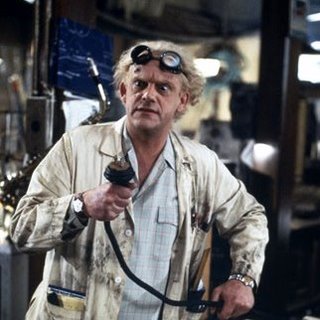
You don't need a rocket scientist or a flux capacitor inventor to figure out that World Series games take longer to play than regular season games.  Managers tend to yank their starting pitchers at the first sign of trouble, and this usually will occur during an inning rather than after it.  Also, there will be more trips to the mound to talk to rattled pitchers and these trips will occur earlier than they would in the regular season.  And of course, there are the commercial breaks.  Having the games in prime time generates more money from advertisers, which means FOX has to squeeze out every penny from said advertisers.  Simple translation:  There are more commercials per break in the action than you would see from April to September.

This is not something new.  In 2000, when the Mets played the Yankees in the World Series, no game lasted less than 3 hours and 20 minutes, with every game starting after 8:00 PM.  Game 1 (a 12-inning game) was nine minutes short of a five-hour game.  On average, each game in the five-game series lasted 3 hours and 46 minutes.  Take out the extra-inning affair in Game 1 and the other games, all of which lasted nine innings, took an average of 3 hours and 30 minutes to play.  There was no plethora of pitching changes and the games were relatively low-scoring (the Mets and Yankees combined to score 35 runs in the five-game series, an average of seven runs per game between the two teams).


I wonder how many kids stayed up to watch Roger Clemens as he thought he threw the ball towards Mike Piazza in Game 2 of the 2000 World Series.


Do you remember when the last day game was played in the World Series?  That was in 1987, when the Twins forced a seventh and deciding game against the Cardinals by defeating them in Game 6, an early afternoon start in Minnesota.  Even so, that game was played on a Saturday, when kids would have been home from school anyway.  The 1984 World Series between the Tigers and the Padres also featured two day games in Games 4 and 5, but they were also weekend affairs.

To find the last weekday day game in World Series history, you have to go back nearly four decades.  On Friday, October 20, 1972, the Cincinnati Reds defeated the Oakland A's in Game 5 of the Fall Classic.  The Reds' victory in Game 5 sent the series back to Cincinnati, where the A's would win their first of three consecutive championships in Game 7.  It would also mark the final time that lights were not needed during a World Series game that took place while kids were still in school.

Television ratings for World Series games have been in a steady decline for quite some time now.  People have more choices when it comes to what they watch on TV at night, especially since the advent of cable television.  There is nothing that seems to suggest that this trend won't continue over the next few decades.  And who is going to be watching those games in the next 10-20 years?  That's right, my friends.  Today's children are going to be the adults of tomorrow who would be watching those games.  Unfortunately, if the games start too late for children to watch in 2011, then how will they develop an interest in the Fall Classic that would make them want to watch in 2021 and beyond?

Major league baseball doesn't have to start their World Series games at 1:00 PM like they used to in the pre-cable days.  They can start them at around 5:00 PM, when children would be out of school.  Parents would be home from work before the games would end and they could watch the best teams in baseball competing for a championship together.  Since World Series games take longer to play then regular season games, these earlier starting games would still run into prime time (which normally starts at 8:00 PM), so FOX can still generate ad revenue from their sponsors at that time.  Since more people tune in to games in at the end, when the game might have the most drama and suspense, more people would be watching those ads between 8:00 and 9:00 PM.

It seems so simple, really.  A late afternoon start time for World Series games would be beneficial to everyone involved.  It would allow for kids to watch entire games without having to worry about games finishing past their bedtimes.  It would allow for parents to watch the games with their kids, which would create more of a mutual love for the game, and it would allow the networks to not only generate more revenue from their sponsors during the most exciting moments of a game, but would also allow them to air their regular programming after the games end.  Assuming games don't go into extra innings, starting them at 5:00 PM would almost always allow the networks to broadcast their regular fall lineup at the conclusion of each game.  After all, who really wants to watch the Simpsons' Treehouse of Horror episodes after Halloween?

For over two decades, Major League Baseball and television network executives have turned the World Series into the World Zzzzeries.  It's time for baseball to use common sense and think of the long-term effects of starting World Series games at such a late hour.  The future of the sport depends on it.

Sabtu, 22 Oktober 2011

A Curious Stat About '80s World Series Champions

In 1983, Eddie Murray and Cal Ripken Jr. helped lead the Baltimore Orioles to the World Series championship, their third since moving to Baltimore from St. Louis in 1954.  At the time, the Orioles were one of the best teams in the American League.  From 1966-1983, no team in baseball won more pennants than Baltimore's six.  Not the Yankees or the Big Red Machine (they each won four).  Not the Dodgers (they won five pennants, but only one championship).  Not even the Oakland A's dynasty (three titles) could surpass the pennant-winning success of the Baltimore Orioles for an almost two decade span.

Murray and Ripken probably expected more championships following their 1983 title, but in the past 28 years, the city of Baltimore has been left without a World Series championship or an American League pennant.  In fact, they're not the only team to win it all in the '80s and then win nothing since then.

Following the Orioles' run to the championship, the Detroit Tigers spent every day of the 1984 season in first place in the American League East, culminating their spectacular season with a World Series championship.  The Tigers won another division title three years later (1987), a pennant in 2006 and another division title this past season, but have not given Motown another championship since '84.

After Detroit's championship in 1984, the Kansas City Royals were the last team to spray champagne in 1985, albeit with a little help from Don Denkinger's blown call in Game 6 of the World Series.  The 1985 campaign marked the seventh playoff appearance for the Royals in ten seasons, but they have not sniffed the postseason since their one championship season.

We're Mets fans.  We know what happened in 1986.  We also know that the Mets haven't won another World Series in the past quarter century.  We can move on to the next team now.

The 1987 Minnesota Twins finally broke the streak of four consecutive World Series winners in the '80s who have failed to win it all since then.  The Twins repeated as World Series champions four years later when Jack Morris (a key member of the 1984 World Champion Tigers) pitched ten shutout innings in the seventh and deciding game of the 1991 World Series against the Atlanta Braves.  But we can talk about that '91 Twins team later (and we will).

The 1988 Los Angeles Dodgers rode on the coattails of Orel Hershiser's arm and Kirk Gibson's bat to stun the Mets in the National League Championship Series and the trying-to-start-another-dynasty Oakland A's in the World Series.  Unfortunately, the Dodgers have failed to reach the World Series, let alone win it, since then.


Mets fans should remember these faces very well, even if they'd rather forget the 1988 season.  (Photo of Orel Hershiser by Tom Gannam/AP; Photo of Kirk Gibson by Steve Dykes/LA Times)


Remember those "trying-to-start-another-dynasty" A's from the last paragraph?  Sure you do.  Well, they did follow up their loss to the Dodgers in '88 with a championship of their own in 1989, defeating their Bay Area rival San Francisco Giants in four games.  The World Series that was known for the devastating earthquake prior to Game 3 would also be known to A's fans as the last one they would win.

Even after the 1980s ended, the curious stat concerning World Series winners failing to win another title continued.  The 1990 Cincinnati Reds shocked the A's in that year's World Series, sweeping Oakland in four games.  The Reds have failed to win another pennant since then.  The following year, the Minnesota Twins won their second title in five seasons.  Although the Twins have won six division titles in the past decade, they have yet to win the World Series that has eluded them for twenty years.

The 1992 Toronto Blue Jays did win another championship following their six-game defeat of the Atlanta Braves in that year's Fall Classic.  However, that title came the following season (1993).  Toronto has failed to return to the postseason since their mini-dynasty ended.

The 1994 strike killed that year's World Series, but did not kill the streak of World Series winners failing to return to glory following their championship seasons.  That streak had one more season left in it, as the 1995 Braves won their first and only title in Atlanta, defeating the Cleveland Indians (who themselves have not won a championship since 1948, the longest title-less drought in the American League) in six games.


Seriously.  This is a Mets site.  Who authorized the use of this photo?


When the Yankees won the World Series in 1996, it ended a stretch in which ten teams won their final World Series championship in 12 seasons (not including the 1994 season, which had no World Series).  Only the 1987 Twins and 1992 Blue Jays were able to win another championship during those dozen seasons, and both of them have now gone approximately two decades since their last title.

For all the talk about parity in baseball in the 21st century, what with teams like the Texas Rangers, San Francisco Giants and Tampa Bay Rays all competing for World Series championships over the past few seasons when very few experts predicted them to reach the Fall Classic, the real time for parity happened a generation ago.

One-third of the teams in major league baseball all won championships from 1983 to 1995.  None of those teams has been able to scale that mountain again.  It's a curious stat that has been overlooked over the past 20-30 years.  It makes you wonder if the teams that are winning championships now will go that long in search of their next title.

Jumat, 21 Oktober 2011

Gentlemen, Move In This Wall!

At Citi Field in 2011, long fly balls came, they died and opposing teams conquered in 2011. The Mets finished with their worst home record (34-47) since 1993, hitting 50 HR at Citi Field in the process. That came after a 49 HR season in the ballpark's inaugural season and a 63 HR campaign in 2010.

All year long, Sandy Alderson heard the fans crying for the fences to be moved in to allow for more home runs by David Wright, Jason Bay, et al.  In fact, If I had a dollar for every time an announcer said "that would have been a home run at any other ballpark" after every long fly ball crashed into the Great Wall of Flushing, I'd be able to afford seats at Yankee Stadium (which I would sell on StubHub, naturally).

So what did Alderson say after witnessing his first season of Mets baseball, a season in which Carlos Beltran's 15 homers led the team in that category, despite playing the last two months of the season as a San Francisco Giant?


"Gentlemen, move in this wall!"


According to Adam Rubin at ESPNNewYork, Citi Field's dimensions will indeed change in time for the 2012 season, with some changes being significant.

The aforementioned Great Wall of Flushing, the 16 foot monstrosity in left field that has seen more dings than dingers, will not be lowered because it is a structural part of the ballpark.  However, a wall half its height (8 feet) will be erected in front of it, with all balls clearing it now being home runs instead of doubles or long outs.  That will cause for a modest reduction in distance down the left field foul line and a more significant reduction in distance in the power alley.

In addition, the MoZone area in right field will be no mo', as that area will be filled in, thus eliminating the overhang of the Pepsi Porch and allowing for more balls to leave the yard in right field.

The most significant change will be in right-center, where the deepest part of the ballpark once stood.  That area, which had been 415 feet from home plate since 2009, will now be moved in to 390 feet, a 6% decrease in depth.  The change will allow for more home runs by David Wright, who prior to 2009, was an excellent opposite field home run hitter, and will give Ike Davis the opportunity to hit balls 60 feet over the wall instead of just 35 feet past it.

Of course, the changes in Citi Field's dimensions will also mean that Mets pitchers will have to pitch differently, as the luxury of throwing a pitch where the hitter could hit a deep, but playable, fly ball will no longer be an option.  (Are you listening to me, Mike Pelfrey?)  But this change will clearly make Mets hitters breathe a sigh of relief, as they will no longer be frustrated by home run trots that turn into slow walks back to the dugout after the ball is caught near the wall.  It will also allow for free agent hitters to not automatically say "thanks, but no thanks" when the option of playing 81 games a year at Citi Field as a Met comes up.

Let's face it.  David Wright has not been the same player since Shea Stadium was renamed Parking Area B.  Jason Bay has also not lived up to his $66 million potential (a.k.a. his contract), although he does hustle and play better than expected defense.  Moving in the walls and lowering the fences should make both players' power numbers approach the levels that were expected of them.  It should also (for the front office's sake) put more fannies in the seats, as attendance at Citi Field has dropped significantly in each of its three seasons.

The fans have spoken and the Mets have answered.  Citi Field will now be a "fair" ballpark (a la Shea Stadium) as opposed to being a pitcher's park.  Let's just hope the cosmetic change to the ballpark does more good for the players dressed in the home whites than the ones in the road greys. 

Rabu, 19 Oktober 2011

Joey's Soapbox: Top Ten Reasons Why The Texas Rangers Will Win The World Series

Greetings, everyone!  Can you believe the baseball season is coming to an end?  In two short months, it'll be winter and I'll be counting down the days till pitchers and catchers report while wondering how to unfreeze my behind from the frozen ground.  (I should probably wear pants under my Mets hoodie.)

Oh, who am I, you ask?  I'm glad you asked!  This is Joey Beartran, your fav'rit inanimate prognosticator.

In case you missed it, over the past month I've given you my Division Series predictions and my League Championship Series predictions.  I fared quite well with my first round picks, correctly picking the winner in three of the four series.  However, I didn't do as well with my LCS picks, losing both series.  Some of you might #BlameBeltran but I choose to place the blame on my excitement because both the Phillies and Yankees were eliminated within 24 hours of each other in their respective Division Series matchups.

So that brings us to the grand finale, the be all and end all, the salsa on the chicken nachos.  It's World Series time!  This year's Fall Classic will feature the two-time American League champion Texas Rangers and the St. Louis Cardinals, who have won more pennants and World Series titles than any team who doesn't play in the House That Juice Built.

Instead of doing my usual prediction, I'd like to do something different in this piece.  I'm going to tell you who's going to win first (the Texas Rangers in 6) and then I'll give you my top ten reasons why they'll win.  Ready?  Let's go!


Top 10 Reasons Why The Texas Rangers Will Win The World Series

10.  The Rangers are the fifth team in the past 20 seasons to reach the World Series in consecutive seasons.  Each of the last four teams who have appeared in back-to-back World Series has won at least one title.  The '08-'09 Phillies (boo) won back-to-back pennants, winning it all in 2008.  The '98-'01 Yankees (double boo) appeared in four consecutive World Series, winning three of them (triple boo) from 1998 to 2000, before losing to Arizona in 2001 (ha ha).  The '95-'96 Braves also won two straight pennants, being crowned in 1995, and the '92-'93 Blue Jays had a mini-dynasty, but because Canada uses the metric system, it was actually a much longer dynasty than you originally believed it to be.

9.  The actor who played Rangers manager Ron Washington was really funny in Moneyball.  Cardinals skipper Tony La Russa has never been funny a day in his life.  Funny = Championship.  Just look what humor did to the Cleveland Indians in the first Major League film.

8.  Tony La Russa overused his bullpen (ya think?) in the National League Championship Series.  He plans to outdo himself in the World Series by using a different pitcher every time Nelson Cruz comes to bat.  After the first four homers, he'll make a pitching change after EVERY PITCH to Cruz.

7.  The Texas Rangers have never played a game in St. Louis.  Ever.  Their only interleague matchup against the Cardinals was in 2004, when St. Louis took two out of three from Texas at the previous Busch Stadium.  Who was the losing pitcher for the Rangers in the rubber match?  None other than R.A. Dickey!  The Rangers will adopt a "Do it for Dickey!" rallying cry in the World Series and exact their revenge on the Cardinals.

6.  The Cardinals need a rally squirrel to help them win ballgames.  The number one pastime in Texas after Cowboys football, college football and high school football is hunting.  That squirrel doesn't stand a chance.

5a)  This was our view in Texas:


5b)  This was our view in St. Louis:


5c)  The view in Texas was far better than the view in St. Louis.

4.  Chris Carpenter is 2-6 with a 7.26 ERA and 1.87 WHIP in 12 career games (11 starts) against the Texas Rangers.  It's his highest ERA and WHIP against any team (min. 50 IP).   He is also the only Cardinals pitcher to ever lose a game to the Rangers, losing to them in the middle game of their only interleague series in 2004.  (Do it for Dickey!)  In case you hadn't heard, Chris Carpenter is starting Game 1 of the World Series against the Rangers.

3.  The 21st century has been full of cities and/or greater metropolitan areas holding multiple championship parades for their victorious teams.  It happened in 2002, when the Lakers won in June and the Angels won in October.  The Boston area repeated the feat in 2004, with the Patriots winning the Super Bowl in February and the Red Sox reversing the curse in October.  It happened a third time in 2009, when the Steelers took home the Vince Lombardi trophy in February and the Penguins won the Stanley Cup in June.  The Dallas Mavericks won the NBA championship this past June.  The Rangers play just a few miles away in Arlington.  That's the definition of a greater metropolitan area, my friends.

2.  The American League and National League have alternated winning the World Series every year since 2005, with the White Sox (2005), Red Sox (2007) and Yankees (2009 - boo) taking home the trophy in the odd-numbered years and the Cardinals (2006), Phillies (2008 - hiss) and Giants (2010) taking that final champagne bath in the even-numbered years.  2011 means that it's time for the American League to pop the cork.

And the number one reason why the Texas Rangers will win the World Series is...


Two words:  Nolan Ryan.  It's been 42 years since he won his first World Series ring.  It's time for him to win a second after coming within three wins of doing it last year.  Tony La Russa has won six pennants (three in Oakland and three in St. Louis) and two World Series championships (one with each team).  He's got his rings.  Now Nolan gets his.  Period.


Enjoy the World Series!

...and do it for Dickey!

Minggu, 16 Oktober 2011

Nolan Ryan: Once A Champion, Always A Champion

On October 16, 1969, the New York Mets won their first World Series championship. The majority of the players on the team were experiencing their first ever title, including a 22-year-old Texan named Nolan Ryan.

Ryan was a flamethrowing right-hander, who could strike a batter out as easily as he could strike a batter, period. Opposing hitters feared him because they never knew where the ball was going to end up after it left Ryan's hand. Despite his control problems on the mound, Ryan was very important to the Mets during their run to the World Series title. Although he only made two appearances in the postseason, both were in crucial spots.

With the Mets one win away from winning the first-ever National League Championship Series, Ryan came on in relief of starter Gary Gentry. Although Gentry had a tremendous rookie season, winning 13 games for the Miracle Mets, he did not fare as well in his initial postseason start. Pitching on his 23rd birthday, Gentry allowed a two-run homer to Henry Aaron in the first inning, had a reasonably effective second inning (walking one batter), before giving up a leadoff single to Tony Gonzalez in the third, followed by a double to Aaron.

That was the end of Gentry's postseason debut, as Nolan Ryan was called upon by manager Gil Hodges to get out of the inning before any more damage was done. Ryan was brilliant in relief of Gentry, stranding both inherited runners in the third inning. He went on to pitch the remaining seven innings, allowing only two runs (a two-run HR by Orlando Cepeda in the fifth inning that temporarily gave the Braves the lead) on three hits. Ryan walked two and struck out seven, and was on the mound when Tony Gonzalez grounded out to third baseman Wayne Garrett to give the Mets their first National League pennant.

Just like he did in the NLCS, Ryan only made one appearance in the World Series against the Baltimore Orioles. Again, it was in a crucial part of the series (Game 3 with the series tied at one game apiece) and in relief of Gary Gentry. This time, however, Ryan was called upon to protect a lead, as Gentry was mowing down the powerful Orioles' lineup. Through six innings, the rookie right-hander had allowed no runs on three hits, while walking two and striking out four. The Mets were carrying a 4-0 lead into the seventh inning at Shea Stadium and were feeling good about their chances to take a 2-1 lead in the series. But after retiring the first two batters in the seventh, Gentry developed a case of wildness. He walked Mark Belanger, pinch-hitter Dave May and Don Buford in succession to load the bases and bring up the dangerous Paul Blair as the potential tying run.

Blair had just completed a breakout season for the Orioles, notching career highs in doubles (32), home runs (26), runs scored (102), RBI (76) and stolen bases (20), while making his first All-Star team and winning the Gold Glove Award in center field. Now he came up to bat with the bases loaded, but he wasn't going to face the suddenly-wild Gary Gentry. Out came Gentry, in came Ryan.

In what was perhaps the turning point of the 1969 World Series, Ryan retired Blair on a lineout to right-center to end the threat and the inning. Ryan would go on to finish the game, although not without getting into a little trouble of his own in the ninth, when he loaded the bases on two walks and a single before striking out (you guessed it) Paul Blair to end the game and give the Mets a one-game advantage in the World Series.

Unfortunately, the Mets' need for an injury-plagued shortstop to play third base exceeded their need for a future Hall of Fame pitcher. The Mets traded Ryan to the California Angels for Jim Fregosi following the 1971 season, where Ryan's legendary career began in earnest. Ryan won 295 games and struck out 5,221 batters AFTER leaving the Mets in stints with the Angels, Houston Astros and Texas Rangers. Although his uniform number has been retired by the three teams he pitched for after he was traded for Fregosi, the only World Series ring on Ryan's finger has a big "New York Mets" on it.

 If everything's bigger in Texas, why does Nolan Ryan's ring say "New York"?

Fast forward to four decades later. The Mets are nowhere near World Series contention and the Texas Rangers are going back to the Fall Classic for the second consecutive season. The Rangers have always had strong hitters, but their recent focus on developing pitchers has finally pushed them over the top in the American League. Who's responsible for taking the Rangers in this pitching-first direction? None other than team president and principal owner Nolan Ryan.

Ryan became the president of the Texas Rangers in 2008 and bought a share of the franchise in 2010, becoming the principal owner earlier this year when his ownership partner, Chuck Greenberg, sold his stake of the team. When Ryan became part of the Rangers' front office in 2008, the Rangers were a sub-.500 team. Their 79-83 mark in 2008 was their eighth losing record in nine seasons. Since then, the Rangers' win total has gone up every season. Texas won 87 games in 2009, followed by a 90-win season in 2010 and a franchise-record 96 wins in 2011.

As the wins have piled up, opponents' run totals have gone down. After allowing 967 runs in 2008, Rangers' pitchers allowed 740 runs in 2009. They got even better in their pennant winning years, allowing 687 runs in 2010 and 677 runs in 2011. The 677 runs allowed this year was the fewest allowed by a Ranger team since 1983. All of this happened with Nolan Ryan in charge.

Nolan Ryan was a winner in New York. He was part of a team that put its focus on young pitching and it carried them to an unexpected championship. Ryan pitched in the majors until 1993, but was never part of another championship team. Now, as president and principal owner of the Texas Rangers, Ryan has a chance to win his second World Series title, 42 years after he won his first.

It's been quite some time since Tom Seaver, Jerry Koosman, Gary Gentry and Nolan Ryan anchored a young pitching staff as they forged their way to a World Championship. The names have now changed to C.J. Wilson, Derek Holland, Matt Harrison and Alexi Ogando, but the message remains the same. Pitching wins championships. It gave a title to the San Francisco Giants last year (over Ryan's Rangers) and it helped Texas win their second consecutive American League pennant this year.The Rangers may or may not give him his second World Series ring this year, but it's clear that Nolan Ryan has established the Texas Rangers as a force in the American League.

Forty-two years ago today, Nolan Ryan celebrated his first title. Now he is four wins away from celebrating his second. Through two generations and two teams, Ryan has proven that he is a true champion. Not bad for a kid from a small Texas town.