Unfortunately, like closers pitching three innings and Jason Bay being a major offensive threat, those things just don't happen anymore. This year's World Series between the Cardinals and the Rangers will have all its games starting at 8:05 PM Eastern Daylight Time (7:05 PM local time in St. Louis and Texas). While this is an improvement over the old 8:29 PM (or later) start times, it's still not early enough for kids to watch.
Let's take Saturday night's Game 3 for instance. The Cardinals outslugged the Rangers, 16-7, to take a two games to one edge in the World Series. The game, as with all World Series games this year, started at 8:05 PM (actually, the first pitch was thrown at 8:06 PM because ceremonial first pitch chucker Dirk Nowitzki needed an extra minute to warm up his seven-foot frame). However, with all the runs and pitching changes, the game took four hours and four minutes to play. That's what happens when you get 23 runs and six pitching changes in the middle of an inning (four made by Tony La Russa and two made by Ron Washington). Even with the "earlier" start time, the game ended at 12:10 AM on Sunday morning.
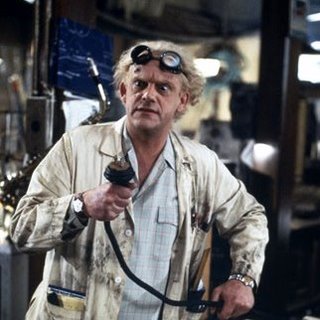
You don't need a rocket scientist or a flux capacitor inventor to figure out that World Series games take longer to play than regular season games. Managers tend to yank their starting pitchers at the first sign of trouble, and this usually will occur during an inning rather than after it. Also, there will be more trips to the mound to talk to rattled pitchers and these trips will occur earlier than they would in the regular season. And of course, there are the commercial breaks. Having the games in prime time generates more money from advertisers, which means FOX has to squeeze out every penny from said advertisers. Simple translation: There are more commercials per break in the action than you would see from April to September.
This is not something new. In 2000, when the Mets played the Yankees in the World Series, no game lasted less than 3 hours and 20 minutes, with every game starting after 8:00 PM. Game 1 (a 12-inning game) was nine minutes short of a five-hour game. On average, each game in the five-game series lasted 3 hours and 46 minutes. Take out the extra-inning affair in Game 1 and the other games, all of which lasted nine innings, took an average of 3 hours and 30 minutes to play. There was no plethora of pitching changes and the games were relatively low-scoring (the Mets and Yankees combined to score 35 runs in the five-game series, an average of seven runs per game between the two teams).

I wonder how many kids stayed up to watch Roger Clemens as he thought he threw the ball towards Mike Piazza in Game 2 of the 2000 World Series.
Do you remember when the last day game was played in the World Series? That was in 1987, when the Twins forced a seventh and deciding game against the Cardinals by defeating them in Game 6, an early afternoon start in Minnesota. Even so, that game was played on a Saturday, when kids would have been home from school anyway. The 1984 World Series between the Tigers and the Padres also featured two day games in Games 4 and 5, but they were also weekend affairs.
To find the last weekday day game in World Series history, you have to go back nearly four decades. On Friday, October 20, 1972, the Cincinnati Reds defeated the Oakland A's in Game 5 of the Fall Classic. The Reds' victory in Game 5 sent the series back to Cincinnati, where the A's would win their first of three consecutive championships in Game 7. It would also mark the final time that lights were not needed during a World Series game that took place while kids were still in school.
Television ratings for World Series games have been in a steady decline for quite some time now. People have more choices when it comes to what they watch on TV at night, especially since the advent of cable television. There is nothing that seems to suggest that this trend won't continue over the next few decades. And who is going to be watching those games in the next 10-20 years? That's right, my friends. Today's children are going to be the adults of tomorrow who would be watching those games. Unfortunately, if the games start too late for children to watch in 2011, then how will they develop an interest in the Fall Classic that would make them want to watch in 2021 and beyond?
Major league baseball doesn't have to start their World Series games at 1:00 PM like they used to in the pre-cable days. They can start them at around 5:00 PM, when children would be out of school. Parents would be home from work before the games would end and they could watch the best teams in baseball competing for a championship together. Since World Series games take longer to play then regular season games, these earlier starting games would still run into prime time (which normally starts at 8:00 PM), so FOX can still generate ad revenue from their sponsors at that time. Since more people tune in to games in at the end, when the game might have the most drama and suspense, more people would be watching those ads between 8:00 and 9:00 PM.

For over two decades, Major League Baseball and television network executives have turned the World Series into the World Zzzzeries. It's time for baseball to use common sense and think of the long-term effects of starting World Series games at such a late hour. The future of the sport depends on it.